H2O Environmental Management provides stormwater planning, permitting, monitoring and compliance support for construction projects and industrial facilities throughout San Diego County and nearby Southern California communities.
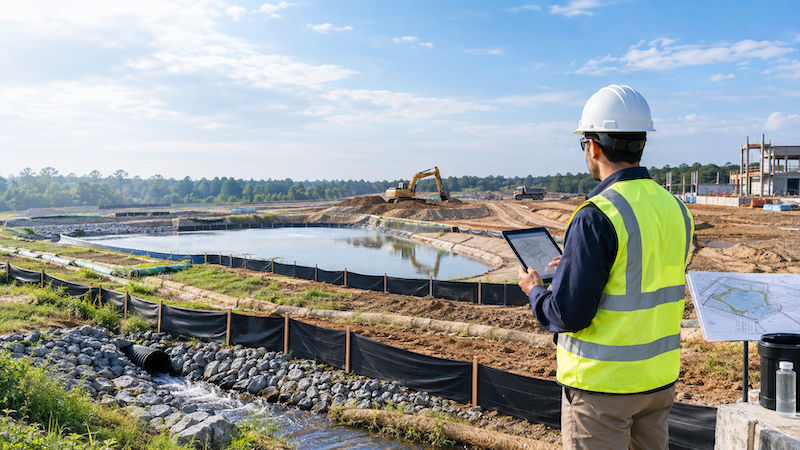
H2OEM provides Professional Engineer (PE) and Qualified SWPPP Developer (QSD) expertise for construction projects subject to applicable California stormwater requirements. This combination supports technically sound SWPPP development, project-specific evaluation and coordination with broader civil engineering and construction considerations.
H2OEM prepares site-specific SWPPPs based on construction activities, drainage, anticipated pollutants, receiving waters, and permit rules. As site conditions change, H2OEM prepares formal SWPPP amendments.
Field implementation services including routine & storm event inspections, BMP review, non-stormwater observation, sampling, monitoring, and practical field documentation.
Assistance with California's SMARTS electronic system: NOI submittals, PRDs, COIs, monitoring records, annual reporting, and Notice of Termination (NOT) submittals.
Field measurements, pH/turbidity testing, sample collection, certified lab coordination, results review, and threshold exceedance documentation.
Effective inspection programs evaluate active site conditions rather than checking repetitive boxes. Inspections cover:
SWPPP documents should be practical compliance tools that reflect actual construction activities and site conditions.

H2OEM assists industrial facility owners and operators with development, implementation and management of industrial stormwater compliance programs under the California Industrial General Permit.
Tailored plans covering facility industrial activities, material exposure, potential pollutant sources, outdoor operations, equipment areas, and drainage locations.
Qualified evaluation of facilities, sampling program design, SMARTS compliance, exceedance response actions, and annual report preparation.
Location evaluations, field sampling, lab coordination, analytical result review, and threshold evaluation to manage potential pollutant exposure.
When sampling indicates exceedances, H2OEM identifies root causes—material exposure, source control, housekeeping—and recommends practical advanced BMPs.
A SWPPP is only effective when employees understand their responsibilities. H2OEM provides practical stormwater training addressing facility pollutant sources, BMP responsibilities, spill prevention, good housekeeping, outdoor material management, stormwater observations, and reporting of potential problems.
Our approach focuses on creating stormwater programs that integrate cleanly into normal facility operations without unnecessary operational disruption.
Preparation and technical review of project-specific water pollution control documentation where required by local agencies or specific contracts.
Assistance with post-construction stormwater planning and permanent water-quality management requirements.
Technical stormwater and water-quality documentation supporting project planning, civil design or agency review.
Evaluation of permanent stormwater treatment systems and post-construction BMP long-term operation requirements.
Technical assistance with stormwater requirements associated with applicable National Pollutant Discharge Elimination System permits.
Evaluation of stormwater requirements associated with applicable Total Maximum Daily Loads and receiving-water constraints.
You do not need to determine every permit requirement before contacting H2OEM. Provide the project or facility location, type of activity, approximate size, and existing documents. H2OEM can review the available information and help identify appropriate next steps.
A Qualified SWPPP Developer (QSD) performs qualified technical activities associated with development and modification of a construction SWPPP and related requirements. A Qualified SWPPP Practitioner (QSP) focuses on qualified implementation activities such as inspections, monitoring and other field compliance responsibilities. Depending on qualifications and project needs, one professional may be qualified to perform both functions.
Stormwater compliance frequently intersects with grading, drainage, construction sequencing, site constraints, BMP design and other engineering considerations. H2OEM combines Professional Engineer (PE) expertise with stormwater qualifications so technical recommendations can be evaluated in the broader context of the project.
QISP means Qualified Industrial Stormwater Practitioner. A QISP provides qualified technical assistance for industrial stormwater compliance activities, including applicable evaluations, reporting and exceedance-response requirements.
Yes. H2OEM provides SWPPP development/QSD services and QSP inspection and monitoring services, allowing clients to obtain coordinated stormwater support through the life of a construction project.
Yes. H2OEM assists construction and industrial clients with preparation and management of applicable SMARTS documentation and reporting. Certain certifications must be completed by the legally authorized party responsible for the project or facility.
Yes. H2OEM can review an existing SWPPP, evaluate current site or facility conditions, and identify potential updates or compliance issues. If you have received a compliance notice, H2OEM can review documentation, evaluate field conditions, and assist in identifying technically appropriate corrective actions.